
Free Writing and Free Sketching to Music

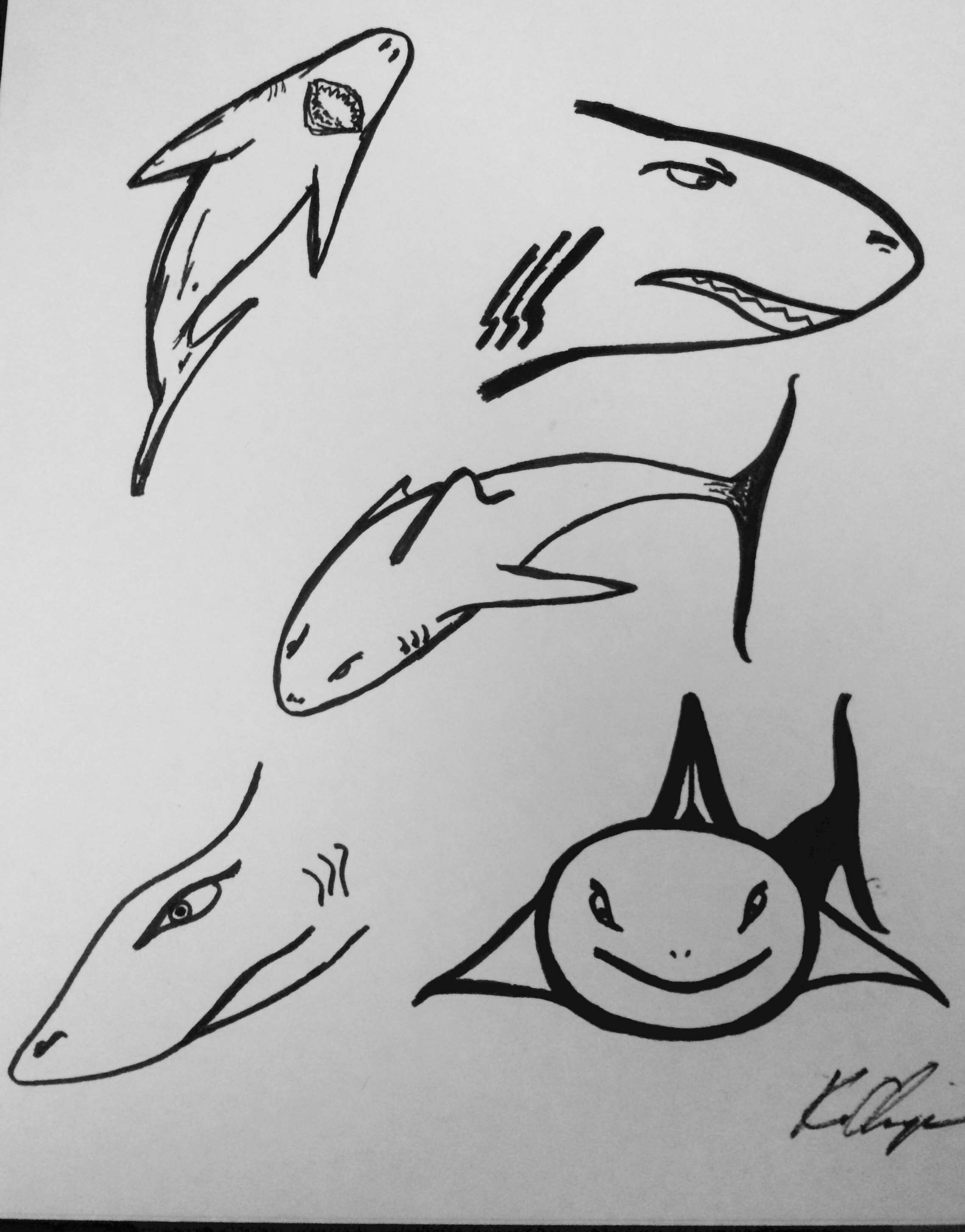
Original Drawings by Keith Chapman

Original Drawings by Keith Chapman


One of the most surprising and most productive creativity exercises I’ve ever tried (and continue to use frequently) is free sketching or free writing to music. It’s a simple exercise that surprises me with great results every time. Here’s how it works. Go to your favorite music service like a Spotify, iTunes, Pandora, or whatever you prefer and find an album or collection of songs that you are unfamiliar with. They can be in a genre you like but really try to find something you haven’t listened to before if at all possible. Then start drawing to it or writing to it. That’s it. There is no plan, no plot, no structure.

For free sketching, consider this a superdoodle or a thematic sketch driven by what the music makes you draw. So, if you are listening to heavy metal you should likely get an aggressive drawing of something. If you listen to classical music, you might get something traditional or sophisticated. Who knows. That’s the beauty of this exercise. You have no agenda. The music leads you to draw whatever you are feeling. It might turn out super abstract or really precise and it is different every time. You might end up with a nice rough draft of something you want to develop into an actual art piece. You might end up with a doodle that any high schooler would have created during class. Just keep the pen moving and enjoy the process.

For free writing, I recommend choosing instrumental music so you don’t get looped in to the lyrics. It is completely possible to write to music with lyrics but for the first couple of times you do this exercise, it is easier to do it to instrumental music. One really interesting approach is to listen to a soundtrack to a movie that you have not seen and write to it. Keep in mind there is no plot or outline or plan. This is sloppy free writing. Characters won’t be well developed, the story will have big gaping holes in it, and scenes may be overly descriptive. That’s ok. It is still incredibly fulfilling to so this type of writing. Let the music set your mood, then whatever pops into your head first is what you write about. You can evolve it with the music. Try to get a story arc in there but don’t be too concerned about it. The resulting story is usually a bruised and battered shell of an idea duct taped together and held in place by the thematic music but what you end up with is an incredibly creative narrative that can be reshaped into a story that you may want to invest in. You might just have a first draft of a story. You might just have complete rubble. The process is exhilarating though and you’re exercising your creative muscles. That is the point.

I often design products to music as well. This is especially relevant to my line of work since I design musical instruments. The inspiration of the music helps incredibly though. If I am designing for a specific genre or artist, I specifically listen to that style of music. It drives a theme through the design and provides inspiration that I otherwise may not be able to conjure up. The key to designing product or brainstorming about product designs to music is to choose your music wisely. If you are designing medical equipment, you should have very calming music to work to, something that naturally heals when you listen to it. If you are designing demolition equipment, find your way to the death metal section. It really can influence your creativity and has been a key element to my success as a designer and author.

Whatever your discipline of creative work, try it to the appropriate genre of music and see if it enhances the process. I am convinced that you will at least get a new influence or new movement in your creative pursuits. And after a few sessions of free writing or free sketching, try it to music you know really, really well and see what happens. Your life influences and memories start merging with the creative influences of the music. You end up with really personally influenced art and that’s where your passion for the art form starts to emerge. So, if you find yourself drained, burned out, or out of touch with your creative side, try this quick exercise to one song or to one album or to a stream of music and get back to your own creative self with added influences and inspirations.

Now go. Create. ~ The Mission Creative

Independent Thinking

Rebecca Bloom Photography

Image by Rebecca Bloom Photography http://www.bloomphoto.com

Happy fourth of July to my fellow Americans out there from The Mission Creative! Today Americans celebrate the independence of our country, the culmination of ideas opposing the previously accepted norm in the colonies at the time. Taking a note from the colonial playbook, we can apply this to our creative work as well to promote new ideas. When we work at a project for a long time or with projects that have the same parameters often, it sometime becomes very difficult to get out of the ruts we grind into the naturally creative paths we usually take. I have experienced this several times myself in product design where the category of the device you are designing rarely changes but the features and improvements of a particular product need to be innovative and refreshing. After designing the same type of product for years and years, it becomes second nature to iterate off of the designs in your past. Over time, that freshness customers expect in a product starts to erode and you end up with a very safe, not-so-innovative design on a product that probably needs it most. One way to combat this is to create an opposing view point in design as a guiding principle. Realize that the same old, same old may not be working this time.

Revolt! Revolutionize your ideas by taking an opposing viewpoint. Question why something exists the way it does as if you have never seen it before. Pretend you have no idea what the product does and question why each feature is there. In fact, get downright mean about it, adamant that there must be a better way and buck the norm. This independent and counter-intuitive thinking releases all of the design criteria you think you must have and allows you to start over with a fresh view. Your guidelines are the revolution of the norm so if you find yourself wandering back to a familiar path, revolt and head the other way. Go orthogonal to your usual way of thinking. In so doing you will find at least one item that you would not normally have crossed paths with that seems to actually be relatively great for the project. This is what you are looking for in revolting on your own design principles – that one opposing idea that actually makes things better, more creative, or at least more interesting. This can be applied to any creative process that you are intimate with to open new creative paths. It likely won’t create an entire new piece of work but it very likely will bring new input because you imposed new rules and guidelines for your own design thinking that oppose your norm. Become a contrarian to your own design thinking and open up a new creative path. Start your own design revolution.

Now go. Create. ~ The Mission Creative

Change Your Scene

Image by Keith Chapman

Image by Keith Chapman

One incredibly easy and simple way to spark creativity is to change your scene. Change your surroundings. Where do you do your creative work? In an office? In a room? At a coffee shop? Take a look at where you are most productive and take a look at what is around you. If you are blocked, go elsewhere even just for one small creative session. When I was writing my first novel, I hit a major lull. Until that time, I went to write at a bar and grill type restaurant over lunches that granted me free wi-fi access. Then I hit a wall. I was lost in the book. I didn’t remember how I got into the weeds but in the weeds I sat staring at a blinking cursor.
Finally, I closed the laptop, gobbled down my food, and left. I went to a local coffee shop, ordered an afternoon coffee and sat down for just another 15 minutes and opened the laptop on a whim. Nope. Blinking cursor sucking my creative synapses right out from under me. Then, totally out of the blue, two well-dressed business ladies sitting near me had a conversation that I could not prevent from overhearing. One lady was complaining how their meetings were so unproductive because people felt the need to talk to fill the air. She went on to say if a meeting is scheduled for 30 minutes and it only needs to take 10 minutes, then be a doll and give the time back to your people. Oddly, this resonated in more ways than one. It well stood true in my own experiences with corporate life but deeper than that was the nudge I needed on my book. I was hung up on  making the dialog of my parody go through this entirely boring scene line by line. I ditched the whole section and summed up the many, many paragraphs by replacing it all with a simple, snide commentary. It shortened the chapter significantly, became more direct, and most importantly removed the logjam. This would not have happened as easily as it had if I had not relocated. Changing it up gives you a chance for newness. This means the muse in each of us gets new input which in turn can result in different outputs. If nothing else, it keeps you moving.

Brainstorm like a Boss, not like your boss

Image by Rebecca Bloom Photography. http://www.bloomphoto.com

Image by Rebecca Bloom Photography. http://www.bloomphoto.com

How many times have you been told “we’ll have to brainstorm some ideas” or you are invited to a “brainstorm session” and first rolled your eyes, maybe actually suspended disbelief, and attended only to realize the brainstorm was really a meeting to listen to the boss’ ideas? Smile, nod, accept… move on. <sigh>

Or… perhaps you are in a healthier environment that is open to ideas and your organization can actually perform a brainstorm session that results in some new ideas. Is the quality of those ideas enough to engage resources on right away? Do you have a plan that will result in a creative or innovative result? Often not.

Here are some basic tenets and ideas on how to run an effective brainstorm session based on my years of design and research and development experience. This has worked well in my experience.

1. Keep the group small. A group under 6 people is ideal. Avoid closed minded people, distant stakeholders, and pessimistic people. If they want to attend they need to change some attitudes or get involved in more detail. Refuse to design by committee. It doesn’t work. Polarize! It is ok to have lovers and haters. Both will talk about your project.

2. Know what the goal is. Too many brainstorms have no goal, deliverable, or target in mind. The facilitators try to keep it “open ended” which translates to “delays” in the business world. Have a definitive goal defined at the start, like “We need to design a product that cuts the lawn shorter with little to no effort that is easy to clean and control.” Built into this statement is a goal with clear criteria outlined in an open enough way to provide leeway of new ideas. It doesn’t say a lawnmower but a product that cuts the lawn shorter – a subtle but important differentiation. If I say we need a lawnmower, you get an image in your head that is very much like what is out there already. However, if I say we need a product that cuts the lawn shorter, this opens the thinking process and may inherently question the norm because as long as the criteria of the lawn being shorter is obtained, the idea can be considered at this stage.

3. Actually facilitate with rules. Start the meeting with ground rules clearly explained to the group and hold them and yourself accountable to those rules. Suggestions include: Do not talk over one another. Do not criticize, challenge, judge, or nay-say any ideas until the idea creation time is completely exhausted. Know the difference between a complete idea and a component idea – both are welcomed. List and record all ideas. Ensure everyone on the team has multiple chances to talk and present ideas. Set a time limit for the session and stick to it.

4. Review all ideas and compare to all criteria. Identify the top 3 to 10 ideas that meet or come close to meeting the criteria of the goal or target regardless of how extreme it may seem at this stage. Revisit the criteria and consider modification of the criteria to improve results. Finally, compare final ideas to final criteria and determine which ideas are worth pursuing.

5. Create an action plan off of the results. Narrow the ideas down to the top 3 that satisfy or come closest to satisfying the final criteria. Create a plan to go execute each of the 3 ideas if they seem feasible to try. Otherwise, refine by having a secondary brainstorm session on each of the 3 main resulting ideas individually, refine the criteria of the goal with another layer of detail, and move closer to satisfying the criteria by brainstorming another level of detail on each of the main ideas.

6. Decide which idea is the best candidate to obtain the goal. The analysis might include cost estimates in resources, time, and money. It might include an evaluation of feasibility, availability, technology, and other component needs to accomplish the goal. One idea may be better than another in satisfying criteria but perhaps is too costly to develop. Compromises start at this level. The goals must prevail.

7. Make a decision. At the end of the brainstorm phase of a project, be sure to walk away with a clean decision, an action plan for the team with assignments, and buy-in from the creators. How creators feel about their creations often shape the outcome of the creations. In most cases, it is better to make a decision and pursue execution of the idea at this point than to sit in limbo with no clear direction. You can always change direction later or improve the project in a second phase or offering.

Now go. Create. ~ The Mission Creative