Creativity on the Go!

FullSizeRender-1

Canyonlands National Park overlook. Photo by Keith Chapman.

Many creative folks are busy folks, and certainly the successful ones! That brings challenges to finding time to actually be creative and to do your creative work. Whether you consider the life of a professional artist with thousands of customers and followers or consider a budding hobbyist with a day job, the actual time they spend doing their creative work is relatively small compared to running their business, holding down their full-time job, or spending time with family and friends. For me, I find time in the cracks of being a dedicated husband and father and a busy business executive. I have worked very hard on finding time to write and am now working on finishing my second book on just how to do that, find the time to write. This new book explains how I found the time to write, finish, edit, and publish my first novel, Sushi Wars – Vol. 1: A New Roll, mostly during work lunches. It wasn’t easy to consistently find the time such that I could actually link it all together to finish a novel, but I did manage to do it.

It is a common problem, finding time to be creative. Many creative folks have a ton of started but unfinished projects. There are as many reasons why they remain unfinished as there are reasons they started them in the first place! One is time, well, consistent time. Stringing the several needed creative sessions back to back long enough to finish a creative project is a constant struggle. You have to find your mode of creative operation, your defined process with a reasonable pace of interaction with the project, to actually finish it. Professionals clearly have this down because it is most likely one of the main reasons they actually became professionals. They found the needed time to become that good. For hobbyists, it is very difficult. There are a million reasons to not work on your creative project. Some people work hard at finding reasons why they shouldn’t work on their projects. And we all know once a project gets shelved for even a few weeks or even days, it is difficult to bring it back up to stride to get it over the finish line. Once you lose momentum on a project, it’s a struggle to find the end.

One of the reasons I started The Mission Creative was to share ways to be creative and how to beat the obstacles we all face when wanting to be creative. Time is either your friend or your enemy when considering a creative project. The good news? It’s your choice on which it will be. The bad news is that it takes discipline to get your process defined and into a routine status with a reasonable interaction pace. And when life derails your routine, you need to know how to get back on track. These derailments could be business travel, unexpected events, family events, long day job hours, or anything else out of the ordinary routine. We all face these but we all don’t necessarily manage them the same. One key trick I have learned is to simply keep the stream of creativity going in those derailments even if it is not directly relating to your on-going project. There are two stages of derailment here in my experience. There is the project derailment and then there is the creativity derailment. Stage one is the project derailment. Let’s say you are working on a woodworking project, building a piece of unique furniture, and then find out midway through that you have to travel for business for 2 weeks and you cannot work on your project during that time. This is the project derailment. Now you have a choice. When you are on your business trip, let’s say you choose to read on the plane, go to business meetings and dinners, and watch movies in your hotel room at night. This is creativity derailment, the loss of your creative output for a significant amount of time, in this case, 2 weeks. Most will find it much harder to come back to your project after these 2 weeks. You’ll have to figure out where you left off, refind your routine, redefine your creative sessions, and it is way too easy to just leave it in the unfinished state.

If you can avoid the creativity derailment, and it is simply a choice you have, then you have a much better chance of returning refreshed with ideas and will be anxious to get back to your project. So, instead of reading a book on the plane and watching movies in the hotel, give yourself a creative assignment before you leave. Consider it a micro-project or better yet a project that you keep trickling in the background that is completely mobile. This can be traveling with a sketch book (or mobile sketch app) and defining what you need to draw before you actually travel. It could be a notebook (or mobile writing app) and defining what you need to write on the trip. It could be a photo assignment that you give yourself using your smartphone camera.

These micro-projects work well for me. When I get a creative routine derailment, I will either define some research I need to get done for my book that I am currently writing or work on my mobile photography portfolio. Find what works for you, but if you need a starting place, try the mobile photography portfolio. You likely take pictures with your phone everyday anyway, so why not make it a portfolio with assignments and further, why not get paid for it and load them up to stock photography apps!

I recently took this on and find it quite liberating on the creativity front. When I return from the derailment, I’m anxious to get back to my major project and even when in the routine, I trickle along the portfolio as a mental break, hobby, and minor, no-risk creative outlet.

Here are some of the best apps you can get started with for your mobile photography portfolio:

Twenty20 – a fun app and website that is easy to use. Upload your mobile photos to your account, apply them to a challenge and if you get noticed and nominated, you can sell your photos. Focused on mobile photography.

SnapWire – a more intense app and website that has a level up game mechanic that can be limiting at times but is still productive. Requests and challenges can make it interesting.

Clashot – a simple upload and sell photo portfolio app. They also have requests from companies. Easy to use.

ScoopShot – an app and website more focused on professional photography but does have a crowdsource photography area and assignments from companies.

Foap – an app and website that issues assignments from companies that stress social media usage and creativity.

Check them out and just trickle one along. It’s fun and easy. You might enjoy it and it will keep your creativity alive and well during life derailments. Derailing a project is sometimes unavoidable but derailing your creativity is really a choice you make which means you can choose to not derail your creativity. Mobile photography is an easy way to keep those creative vibes flowing.

Now go. Create. ~ The Mission Creative
Learn What You Don’t Need To Get a New Feed

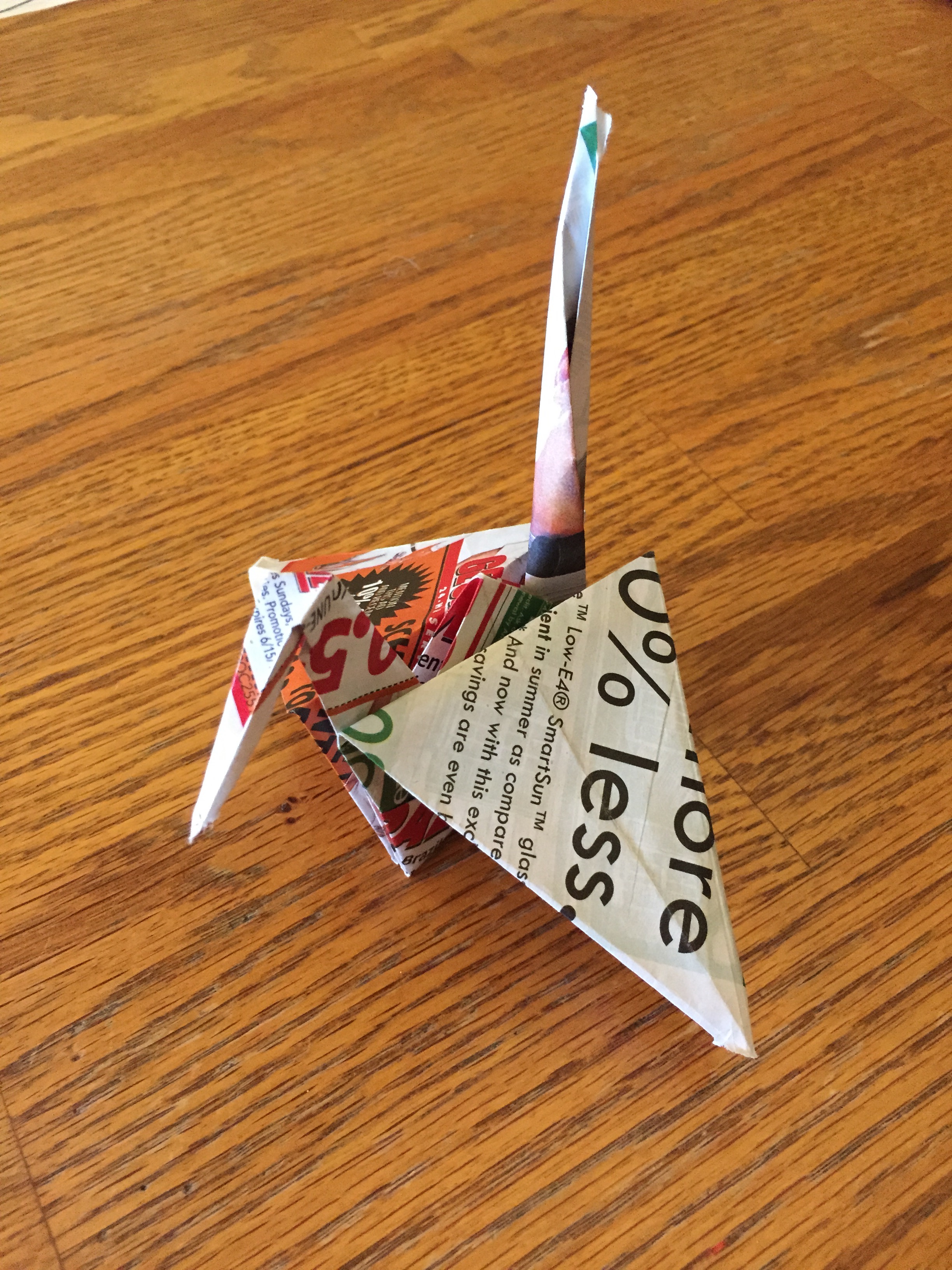
Origami Crane from a newspaper

I learned to make an Origami Crane using a newspaper.

I am a big fan of learning. In fact, somewhere during high school, I figured out how to learn new things quickly. I’m not sure how it happened exactly but it may have had to do with the workload I had and trying to balance that with sports, working on my car, playing music, and a bunch of other fun stuff. In fact, I attribute most of my career’s success to the my ability to learn and learn quickly. I am constantly learning. I read, listen to podcasts, listen to people, ask questions, and try stuff on my own with reckless abandon. At times, I’m a bit scattered. There never seems to be enough time to try all the things I want to try. For example, I never really had much interest in origami, but one Saturday morning while sitting with my family after breakfast, I tore off a piece of newspaper, Googled “easy origami” and instructions on how to fold a crane came up. I loaded a good image of the instructions onto my iPad and started folding. I have no idea why I chose to do this. It just seemed like a quick thing to learn and do while enjoying my coffee. Well, after finishing the crane, one of my sons became interested and wanted to keep the crane, leaving my other son wanting a crane for himself. So, I folded a second one, gave it to him, and off the cranes went into the imaginations of two active kids. And that was that. I haven’t looked at origami since and really don’t have an interest in doing so, at least not at the moment.

So, why tell the tale of a newspaper turned crane? Well, I have found great success in just simply learning things. It doesn’t matter what it is. Just keeping learning anything. As I have expressed before, my theory on creativity is that new thoughts and ideas come from stitching other, past thoughts and ideas together. So, when you learn something new, anything new, you are adding to your library of ideas and thoughts. When will the paper crane come in handy? I have no idea, maybe never, but I can’t tell you how often I’ve pulled ideas from one discipline and married it to another discipline to get a completely unique idea. I once got an idea on how to design a unique software algorithm from combining a pulley system with a Plinko machine! Two independent mechanical concepts producing the key to a software program is just one example. I once designed a dolly that was to carry a Sidewinder missile housing from a workshop area to an aircraft using an idea I had learned about from bridge design and combined it with a concept I learned from looking at a monster truck.

The bigger your library of ideas and the broader the subjects carried in that library, the better chances you have of matching and connecting two or more ideas that would not naturally go together to form a new idea. In the simplest form, it is like the old commercial for Reese’s Peanut Butter Cups. “You got your chocolate in my peanut butter.” “You got your peanut butter in my chocolate.” Voila! Reese’s Peanut Butter Cups are born. Here is one of those ancient commercials. Ok, well, you can’t really un-see that. Sorry. That is an overly simplified concept of what I’m talking about but it gets the point across. Mix and match to create something new.

Now to apply it. One of the best things I ever started doing was to listen to podcasts on my commute to work. I listen to all kinds of crazy stuff. The only requirement is that I must learn from it. I listen to podcasts on business, entrepreneurship, animals, history, technology, science, woodworking, biographies, beer making, and psychology to name a few. Not only does it make my commute far more interesting, but it is filling my library with all kinds of interesting material to pull from at a later time. It’s not like I remember everything either, but some sense of those things I’ve learned are in there and can prove to be quite useful. So, listen to some podcasts. Read some books on a topic you would never read about. I have one of the most eclectic libraries of anyone I know. Most view it as scatterbrained. I view it as filling my idea library. Here is another idea. Go to a very specific and focused museum and dive deep into it. Pick a modern art museum or a firefighter museum or other obscure topic and learn about it beyond just skimming the placards. However you do it, fill the library with information from all disciplines in art, science, language, history, math, engineering, music, documentaries, anything! Keep learning what you do not need to get a new feed of creativity!

Now go. Create. ~ The Mission Creative

Extrapolate the Future

Original Photo by Keith Chapman.

Original Photo by Keith Chapman.

One of the best exercises to generate creative ideas specific to something you already know or are currently working on is to extrapolate into the future from the current state of that thing or item. Let me explain. New ideas are fundamentally based on other ideas. My theory on creativity is that at the most fundamental, common core level it is driven by establishing connections between things that have not yet been connected. When we see something new and think to ourselves, “wow, that is clever” or “wow, that is creative,” we are admiring the connection and mixture of things that already exist but in new ways which makes it seem like it didn’t exist before. If you look at how art has evolved over the centuries and if you look at how technology has evolved over the centuries, you will see connections from the first one we know about to the next one and the next one and so on. We get amazed when we know about an early one and look at a new one. We don’t see the steps in between, the evolution, and the difference is so large we give more credit to the creativity and muse of the person who created it. Fundamentally though, as a human race, we are building on what was built before us. This creates tremendous opportunity. As one person connects two things. Another may connect two other things or the same two things in completely different ways. So, as it may seem limited if all we can create is through combination of existing things or ideas, it absolutely is the contrary. The combinations of things, abstract or concrete, is how we create.

So, where am I going with this? I am asking you to chose an area in which you want to be highly innovative or creative, likely something you are working on or want to work on. Choose something that exists today that you admire and want to participate in as a creative force. Now, accelerate time in your mind by looking at that thing’s arc to existence. It came from something else so look a few iterations before it, back in time and determine the arc it took to get to its current state. Write these steps down until you get to the current status. Look at the evolution of the current thing that you are identifying. Now, what is the next step? Ask yourself how this item evolves in the next iteration. It doesn’t matter how small it evolves. It might just be a simple step or perhaps you see an obvious leap. Write that down below the current thing. Now assume that thing now exists and repeat the evolution in small steps. Keep doing this and add in “what if’s” to the equation and assumptions. Suppose one of your evolutionary steps relies on another technology or technique that doesn’t yet exist. Go with it. Assume it does. Keep evolving the item so you can hardly recognize it. Then keep going. You should at a minimum have at least 10 iterations in the evolution. You should extrapolate as many future evolutions steps as you possibly can. There are no rules here so you can leverage anything as long as it is an evolution beyond the current step you just worked on.

After you have defined several evolutions and have crested 10 iterations, go back and look at the evolutions. Evaluate them on likelihood of potentially happening and note those as possible innovations to develop or creative leaps that you should work towards actually taking. If the evolutions you determined are not all that spectacular or if they do not inspire a true creative spark then do the same exercise again but now use a mixture with something else involved in the evolution, add something to the mix, a technique, idea, technology or process. Now repeat the steps and review to see if you have stumbled onto an idea worth working on. Keep going or go further out until you land on something noteworthy. Extrapolate how art, science, technology, and anything else evolve into the future. Take a futurist’s view and you’ll find some creative things to perhaps pursuit. Now identify that one new thing that you chose as noteworthy and figure out if there is a path to actually accomplishing that with what you have in front of you. If not, then list out the things required to get there. There may be another step in this secondary outline that sparks a creative thought or innovation. Then work on that.

The process of extrapolating ideas into the unknown will inherently make you choose some things to attach to other existing things and create new things. Even if those new things are not quite feasible today. The steps you would have to take to make it feasible may very well uncover a creative idea you need to work on… right now! The process at the very least will open your thoughts into what could be possible. That alone feeds the creativity you need.

Now go. Create. ~ The Mission Creative
Free Writing and Free Sketching to Music

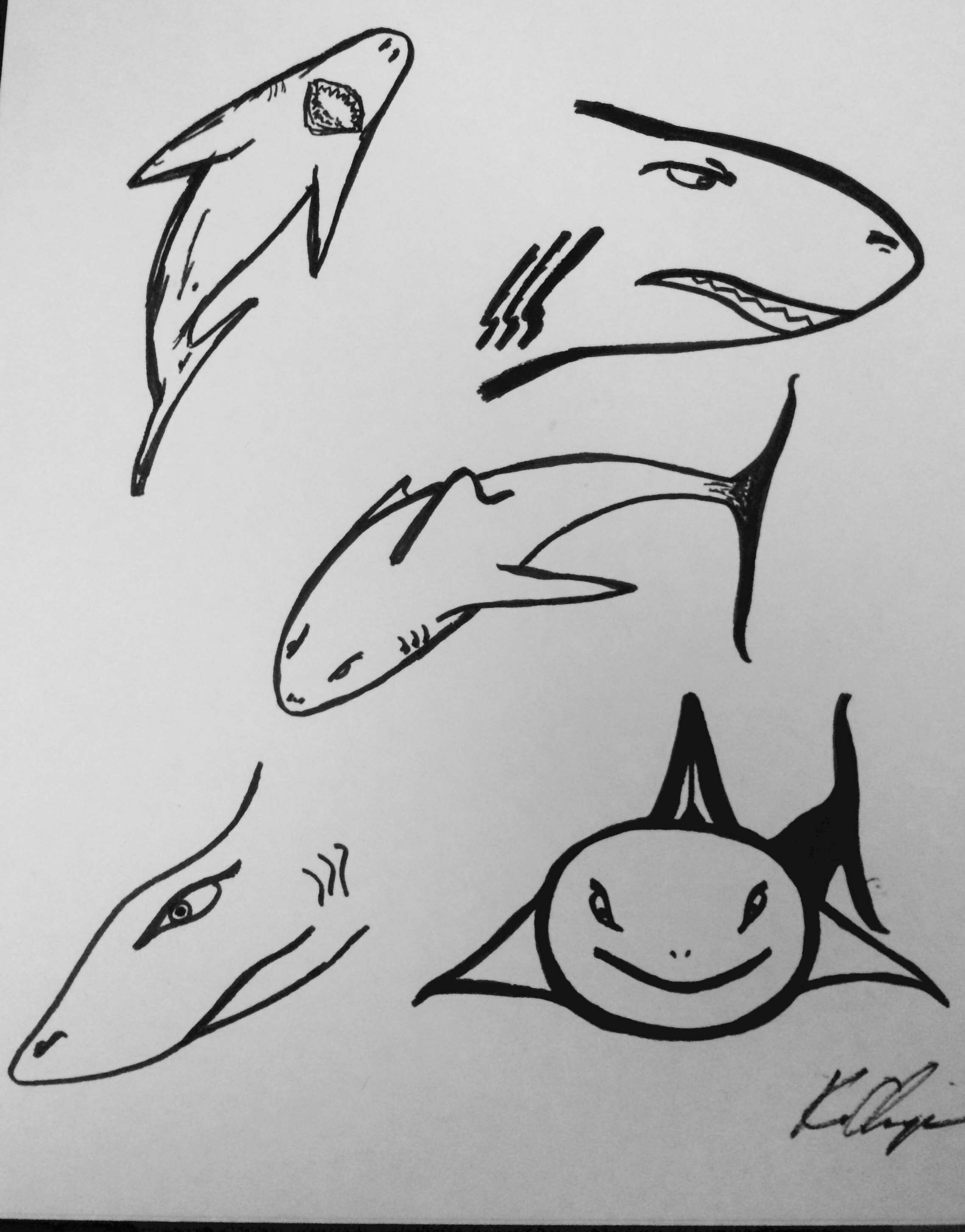
Original Drawings by Keith Chapman

Original Drawings by Keith Chapman


One of the most surprising and most productive creativity exercises I’ve ever tried (and continue to use frequently) is free sketching or free writing to music. It’s a simple exercise that surprises me with great results every time. Here’s how it works. Go to your favorite music service like a Spotify, iTunes, Pandora, or whatever you prefer and find an album or collection of songs that you are unfamiliar with. They can be in a genre you like but really try to find something you haven’t listened to before if at all possible. Then start drawing to it or writing to it. That’s it. There is no plan, no plot, no structure.

For free sketching, consider this a superdoodle or a thematic sketch driven by what the music makes you draw. So, if you are listening to heavy metal you should likely get an aggressive drawing of something. If you listen to classical music, you might get something traditional or sophisticated. Who knows. That’s the beauty of this exercise. You have no agenda. The music leads you to draw whatever you are feeling. It might turn out super abstract or really precise and it is different every time. You might end up with a nice rough draft of something you want to develop into an actual art piece. You might end up with a doodle that any high schooler would have created during class. Just keep the pen moving and enjoy the process.

For free writing, I recommend choosing instrumental music so you don’t get looped in to the lyrics. It is completely possible to write to music with lyrics but for the first couple of times you do this exercise, it is easier to do it to instrumental music. One really interesting approach is to listen to a soundtrack to a movie that you have not seen and write to it. Keep in mind there is no plot or outline or plan. This is sloppy free writing. Characters won’t be well developed, the story will have big gaping holes in it, and scenes may be overly descriptive. That’s ok. It is still incredibly fulfilling to so this type of writing. Let the music set your mood, then whatever pops into your head first is what you write about. You can evolve it with the music. Try to get a story arc in there but don’t be too concerned about it. The resulting story is usually a bruised and battered shell of an idea duct taped together and held in place by the thematic music but what you end up with is an incredibly creative narrative that can be reshaped into a story that you may want to invest in. You might just have a first draft of a story. You might just have complete rubble. The process is exhilarating though and you’re exercising your creative muscles. That is the point.

I often design products to music as well. This is especially relevant to my line of work since I design musical instruments. The inspiration of the music helps incredibly though. If I am designing for a specific genre or artist, I specifically listen to that style of music. It drives a theme through the design and provides inspiration that I otherwise may not be able to conjure up. The key to designing product or brainstorming about product designs to music is to choose your music wisely. If you are designing medical equipment, you should have very calming music to work to, something that naturally heals when you listen to it. If you are designing demolition equipment, find your way to the death metal section. It really can influence your creativity and has been a key element to my success as a designer and author.

Whatever your discipline of creative work, try it to the appropriate genre of music and see if it enhances the process. I am convinced that you will at least get a new influence or new movement in your creative pursuits. And after a few sessions of free writing or free sketching, try it to music you know really, really well and see what happens. Your life influences and memories start merging with the creative influences of the music. You end up with really personally influenced art and that’s where your passion for the art form starts to emerge. So, if you find yourself drained, burned out, or out of touch with your creative side, try this quick exercise to one song or to one album or to a stream of music and get back to your own creative self with added influences and inspirations.

Now go. Create. ~ The Mission Creative

Independent Thinking

Rebecca Bloom Photography

Image by Rebecca Bloom Photography http://www.bloomphoto.com

Happy fourth of July to my fellow Americans out there from The Mission Creative! Today Americans celebrate the independence of our country, the culmination of ideas opposing the previously accepted norm in the colonies at the time. Taking a note from the colonial playbook, we can apply this to our creative work as well to promote new ideas. When we work at a project for a long time or with projects that have the same parameters often, it sometime becomes very difficult to get out of the ruts we grind into the naturally creative paths we usually take. I have experienced this several times myself in product design where the category of the device you are designing rarely changes but the features and improvements of a particular product need to be innovative and refreshing. After designing the same type of product for years and years, it becomes second nature to iterate off of the designs in your past. Over time, that freshness customers expect in a product starts to erode and you end up with a very safe, not-so-innovative design on a product that probably needs it most. One way to combat this is to create an opposing view point in design as a guiding principle. Realize that the same old, same old may not be working this time.

Revolt! Revolutionize your ideas by taking an opposing viewpoint. Question why something exists the way it does as if you have never seen it before. Pretend you have no idea what the product does and question why each feature is there. In fact, get downright mean about it, adamant that there must be a better way and buck the norm. This independent and counter-intuitive thinking releases all of the design criteria you think you must have and allows you to start over with a fresh view. Your guidelines are the revolution of the norm so if you find yourself wandering back to a familiar path, revolt and head the other way. Go orthogonal to your usual way of thinking. In so doing you will find at least one item that you would not normally have crossed paths with that seems to actually be relatively great for the project. This is what you are looking for in revolting on your own design principles – that one opposing idea that actually makes things better, more creative, or at least more interesting. This can be applied to any creative process that you are intimate with to open new creative paths. It likely won’t create an entire new piece of work but it very likely will bring new input because you imposed new rules and guidelines for your own design thinking that oppose your norm. Become a contrarian to your own design thinking and open up a new creative path. Start your own design revolution.

Now go. Create. ~ The Mission Creative

Change Your Scene

Image by Keith Chapman

Image by Keith Chapman

One incredibly easy and simple way to spark creativity is to change your scene. Change your surroundings. Where do you do your creative work? In an office? In a room? At a coffee shop? Take a look at where you are most productive and take a look at what is around you. If you are blocked, go elsewhere even just for one small creative session. When I was writing my first novel, I hit a major lull. Until that time, I went to write at a bar and grill type restaurant over lunches that granted me free wi-fi access. Then I hit a wall. I was lost in the book. I didn’t remember how I got into the weeds but in the weeds I sat staring at a blinking cursor.
Finally, I closed the laptop, gobbled down my food, and left. I went to a local coffee shop, ordered an afternoon coffee and sat down for just another 15 minutes and opened the laptop on a whim. Nope. Blinking cursor sucking my creative synapses right out from under me. Then, totally out of the blue, two well-dressed business ladies sitting near me had a conversation that I could not prevent from overhearing. One lady was complaining how their meetings were so unproductive because people felt the need to talk to fill the air. She went on to say if a meeting is scheduled for 30 minutes and it only needs to take 10 minutes, then be a doll and give the time back to your people. Oddly, this resonated in more ways than one. It well stood true in my own experiences with corporate life but deeper than that was the nudge I needed on my book. I was hung up on  making the dialog of my parody go through this entirely boring scene line by line. I ditched the whole section and summed up the many, many paragraphs by replacing it all with a simple, snide commentary. It shortened the chapter significantly, became more direct, and most importantly removed the logjam. This would not have happened as easily as it had if I had not relocated. Changing it up gives you a chance for newness. This means the muse in each of us gets new input which in turn can result in different outputs. If nothing else, it keeps you moving.